
Brown Hair Color Shades - A Complete Brunette Guide
Brown Hair Color Shades
Brown hair color shades range from icy ash to deep chocolate and warm caramel gold. This guide breaks every shade down in plain language, straight from a working colorist’s chair, not a box dye label.
It covers every major brown family, where highlights and lowlights fit in, and how to match a shade to your skin tone. Picking the right one starts with knowing what your options actually look like, not just their names.
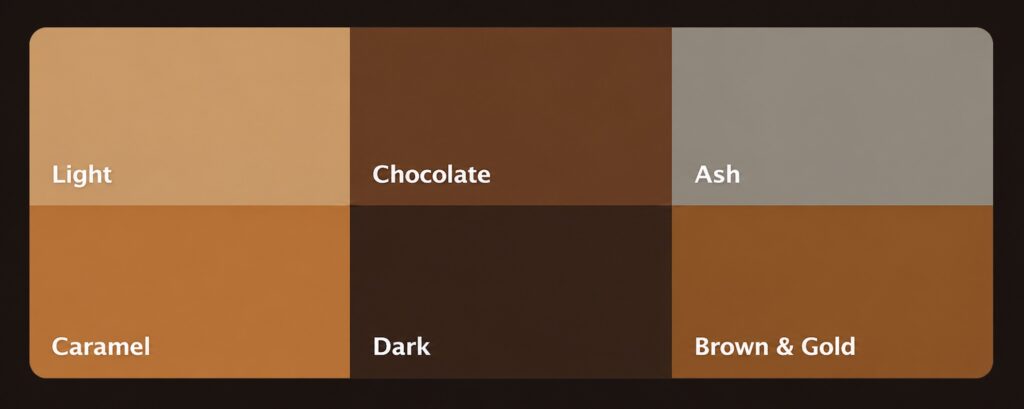
Brown Hair Color Shades at a Glance
Here is the short version before we go deep on each one.
- Light brown: soft and sun kissed, low contrast against most skin tones
- Chocolate brown: warm, rich, medium depth, the most universally flattering brown
- Ash brown: cool toned, muted, cancels out red and brassy tones
- Dark brown: deep and dramatic without going fully black
- Brown and gold: golden brown blend, warm and full of dimension
Each family behaves differently depending on your natural level, your skin’s undertone, and how much upkeep you want. The sections below go deeper on each one.
The Main Shades of Brown Hair Color
Brown hair color shades are not one shade. They sit on a spectrum, and knowing where you land on it changes what you ask for in the chair.
Light Brown Hair Color
Light brown sits closest to blonde, soft and low contrast. It flatters most skin tones because it reads more like a natural sun fade than a dramatic change.
It is also a common landing spot for clients transitioning out of blonde. The color grows out gently, so the regrowth line stays soft between appointments.
Chocolate Brown Hair Color
Chocolate brown carries real warmth without tipping into red. It is one of the most requested browns because it flatters a wide range of undertones, not just one type.
The name comes from its depth, rich and even, closer to melted chocolate than flat brown paint.
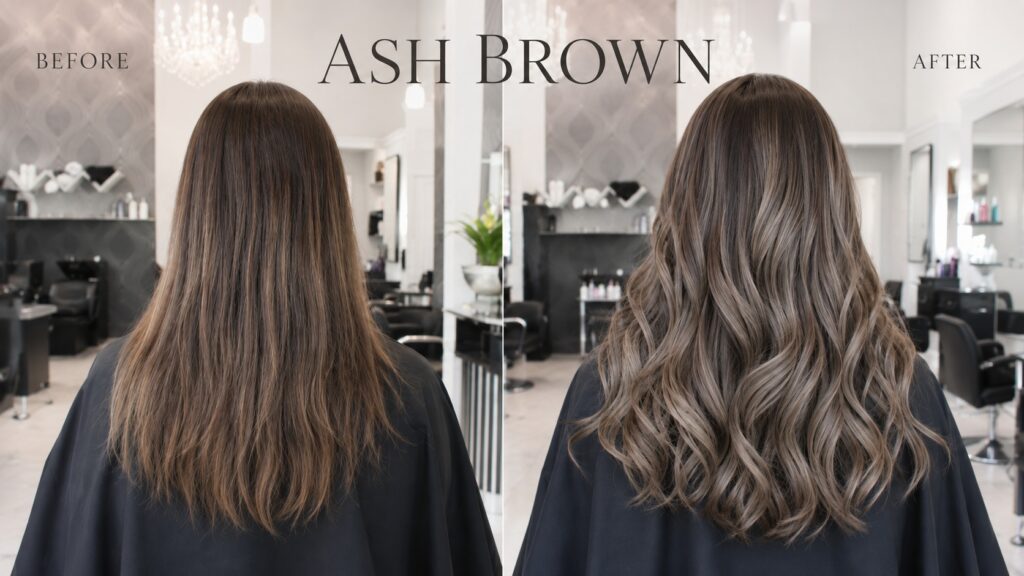
Ash Brown Hair Color
Ash brown is a cool, muted brown built to cancel out red and orange tones. Your colorist does this by mixing in a blue or green based pigment that neutralizes warmth before it can surface.
Ash is one of the highest demand browns we see, and one of the highest maintenance. Without the right aftercare, warmth creeps back in within weeks.
Caramel Brown Hair Color
Caramel sits between blonde and brown, a warm golden amber that catches light. On its own as an all over color, it reads lighter and softer than a classic brown.
Caramel is more commonly used as a highlight than a solid color. That is exactly why it pairs so well with the highlight and lowlight techniques covered further down.
Dark Brown Hair Color
Dark brown is the deepest brown before you cross into black. It still catches dimension in direct sunlight, which is the main thing that separates it from a flat, solid black.
This depth tends to suit deeper or cooler skin tones especially well, though your colorist should always confirm that in person.
Brown and Gold Hair Color
Brown and gold is a golden brown blend built for warmth. Gold tones reflect light differently than flat brown, which is why this shade reads as dimensional rather than one note.
It works especially well on clients with warm undertones who want richness without going as light as caramel.
Quick Tips
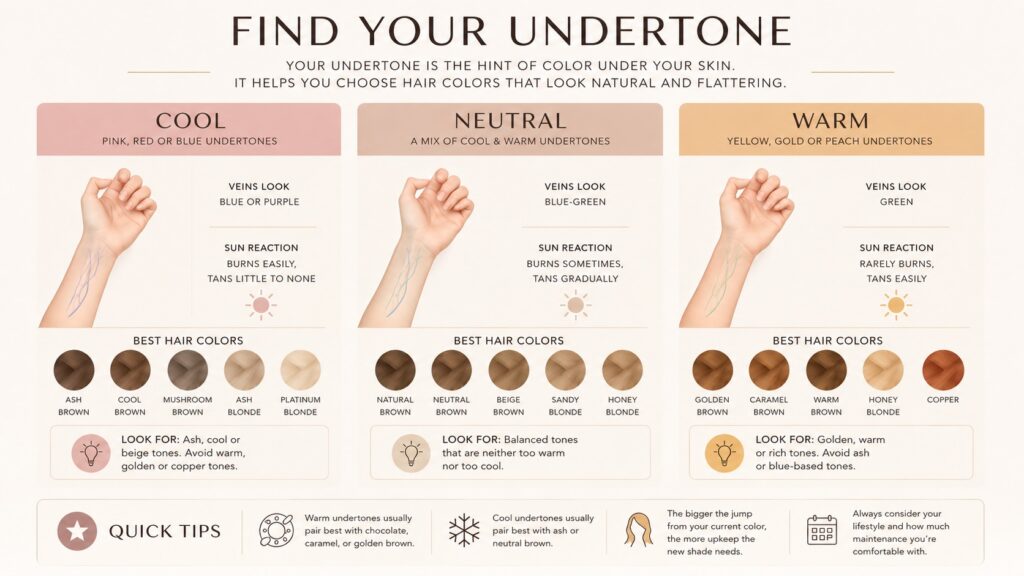
How to Choose the Right Brown Shade for Your Skin Tone
The shade name matters less than how it sits against your actual skin. This is where a consultation earns its keep. Understand what is your undertone and it’ll help you choose the right color for you.
Brown Hair Color for Brown Skin Tones
Richer, warmer browns, chocolate, caramel, and golden brown, tend to complement deeper skin tones especially well. They add warmth instead of flattening it out.
Ash and cooler browns can still look striking on brown skin, but the pigment balance matters more here than on lighter skin. Too much blue or green base can read dull instead of cool.
This is one area where a photo from a chart will only get you so far. Your own undertone, not just your skin depth, decides what actually works.
Warm, Cool, and Neutral Undertones
Undertone is the subtle color underneath your skin, not how light or dark your skin is. It usually falls into warm, cool, or neutral.
A quick way to guess yours: check the veins on your wrist. Greenish veins usually mean warm undertones, bluish usually mean cool, and both mean neutral.
If your veins are hard to see, try this instead: hold a plain white piece of paper right up next to your face, somewhere with good light. Look at your skin right where it touches the paper. If it looks pink or rosy, you’re probably cool-toned. If it looks yellow or golden, you’re probably warm-toned.
Key Takeaways
Brown Hair Color with Highlights and Lowlights
A solid brown is not your only option. Highlights and lowlights add dimension to brown hair through individual foiled sections, placed to catch the light without changing your base color.
Balayage builds that same dimension by hand. A stylist paints lightener directly onto the hair in loose, sweeping strokes instead of foils, so the color grows out softer and blends closer to your natural line.
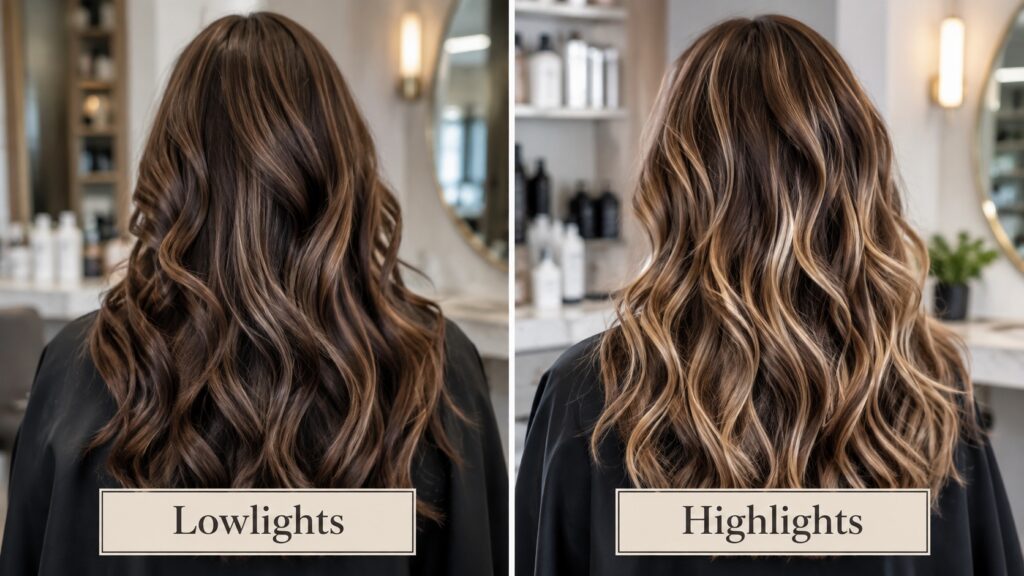
Hair Color Brown with Caramel Highlights
Caramel highlights woven through a brown base add warmth and movement without lightening your whole head. It is a lower commitment way to test caramel before going lighter overall.
Placement matters here. Highlights concentrated around the face brighten your features, while highlights through the ends add movement when your hair is down.
Black Hair Color with Brown Highlights
Adding brown highlights to a black base softens the flatness that solid black can create. It adds movement without committing to a full brown color change.
This works best with dimensional placement rather than an even, all over highlight. Too much brown lightens the look further than most clients asking for this actually want.
Light Brown Hair Color with Lowlights
Lowlights are strands colored slightly darker than your base, the opposite of highlights. On light brown, they add depth instead of more lightness.
This is one of the most overlooked ways to add dimension to a light brown that has started to look flat. Almost nothing written online covers it, even though it solves a real problem.
Keeping Your Brown Color Fresh
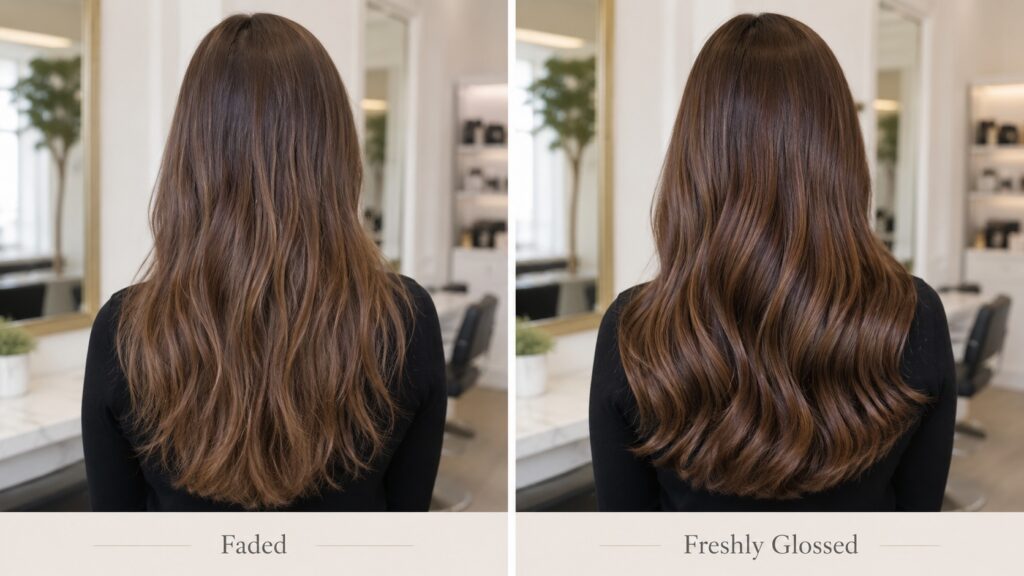
Brown fades differently depending on which family you chose. Ash tones drift warm again the fastest. Chocolate and dark brown fade more gracefully.
Hair Gloss for Colored Hair
A gloss is a clear or lightly tinted glaze added after your color. It seals the cuticle, adds shine, and helps your brown stay true between full color appointments.
Avalon’s hair color service covers gloss and toner in more depth if you want to know when to add one to your routine.
How Often to Refresh Your Brown
Full color visits are usually spaced further apart than root maintenance. Ash browns typically need a toning refresh sooner than warmer browns, since they show regrowth and fading faster.
If you are maintaining color between full appointments, A root touch-up and grey coverage service would be required for upkeep. Sometimes brown fades unevenly or shifts toward a tone you did not want, patchy, brassy, or just off. That calls for a color correction, not a simple refresh.
Calgary’s dry air and chinook winds pull moisture from hair faster than more humid climates. That is part of why brown tones, ash especially, can look dull sooner here than somewhere with more humidity in the air.
Professional Color vs At Home Brown Hair Dye
Box dye is built for one result on average hair. It cannot adjust for your natural level, your color history, or how porous your hair already is. Acquiring the right brown hair color shade will not come out correct with box dyes.
A colorist checks all three before mixing anything. That is the difference between a brown that looks the way the box promised and one that comes out warmer, darker, or patchier than expected.
This matters most if your hair is already colored. Box dye applied over previous color does not know what is underneath it. A colorist does, because they ask first.
Brown Hair Color Shades - Frequently Asked Questions
What is the best brown hair color?
The best brown is the one matched to your undertone, hair health, and how much upkeep you actually want. A shade that looks perfect on a chart can still be the wrong call for your hair.
What is the prettiest shade of brown hair?
There’s no single prettiest brown. Chocolate brown tests well across the widest range of skin tones thanks to its balanced warmth, but the right shade still depends on your own undertone.
What is the best light brown hair color?
Light brown sits closest to blonde with soft, low contrast, which is why it flatters most skin tones and reads more like a natural sun fade than a dramatic color change.
What brown hair color makes you look younger?
Lighter, warmer browns near the face soften contrast, which often reads as more youthful than a flat, solid dark color, especially over a lot of grey. A general pattern, not a guarantee.
What skin tone looks good in chocolate brown?
Chocolate brown flatters a wide range of undertones. Richer, warmer browns like chocolate tend to complement deeper skin tones especially well, adding warmth instead of flattening it out.
What colors look best on dark brunettes?
Caramel or brown highlights, placed with dimension rather than all over, soften a dark brunette base and add warmth and movement without committing to a full color change.