
Balayage vs Highlights
Balayage vs Highlights: Which Hair Color Technique Is Right for You?
Balayage vs highlights is the first decision before any hair color appointment. Balayage is hand-painted for soft color, highlights are foiled for brighter color.
I’m Hassan, owner of Avalon Hair Salon in Calgary. I have been coloring hair for over 20 years, and this guide breaks down exactly how balayage and highlights differ.
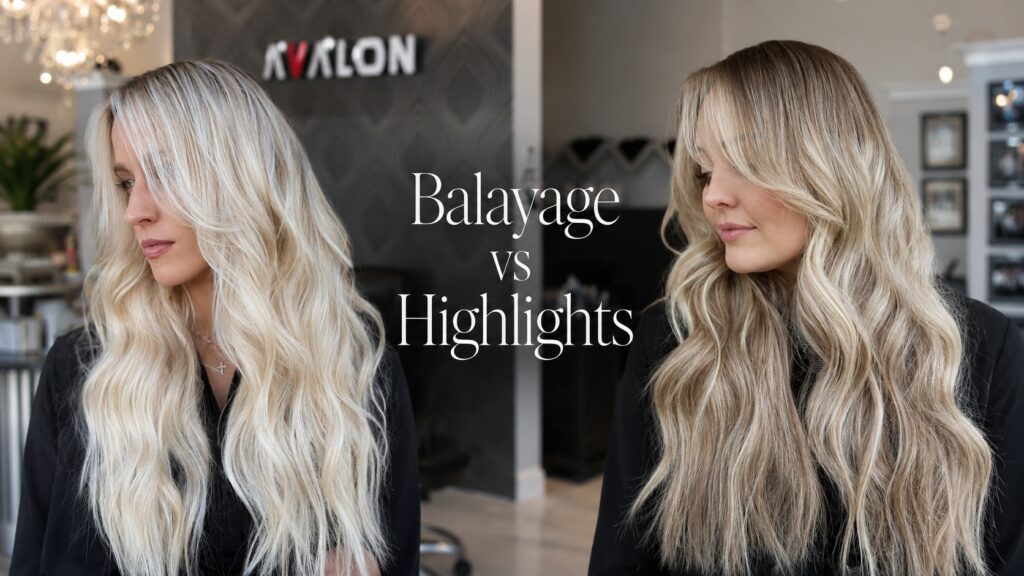
Balayage vs Highlights at a Glance
- Balayage: hand-painted freehand, soft grow-out, fewer root touch-ups
- Highlights: foiled sections, brighter and more uniform color
- Lower maintenance: balayage, thanks to its soft, sun-kissed placement
- Higher, more even brightness: highlights, thanks to full foil saturation
- Grey blending: my Air-touch balayage technique can soften some grey. Full grey coverage is its own dedicated service
What Is the Difference Between Balayage and Highlights?
Balayage is a French word for sweeping. I paint color onto your hair by hand, working with your natural part and growth pattern.
Highlights use foil instead. I isolate sections of hair and coat them with lightener.
I wrap each section so the color processes on its own.
Placement is the real difference. I paint balayage to fade in near the root, so your regrowth looks softer for longer.
Foil highlights can start closer to the scalp, which shows a visible line sooner.
Quick Comparison: Balayage vs Highlights
What Is Balayage?
Balayage is my most requested color technique. I paint lightener directly onto sections of your hair, working around your face shape and part.
The result grows in softly, without a hard line at the root. Most balayage appointments run 2.5 to 6 hours, depending on your color and how much dimension you want.
Balayage starts at $255, with your exact price depending on length, thickness, and how much dimension you want.
My Balayage Calgary Specialist page breaks down every technique, from Lived-In to Air-touch.
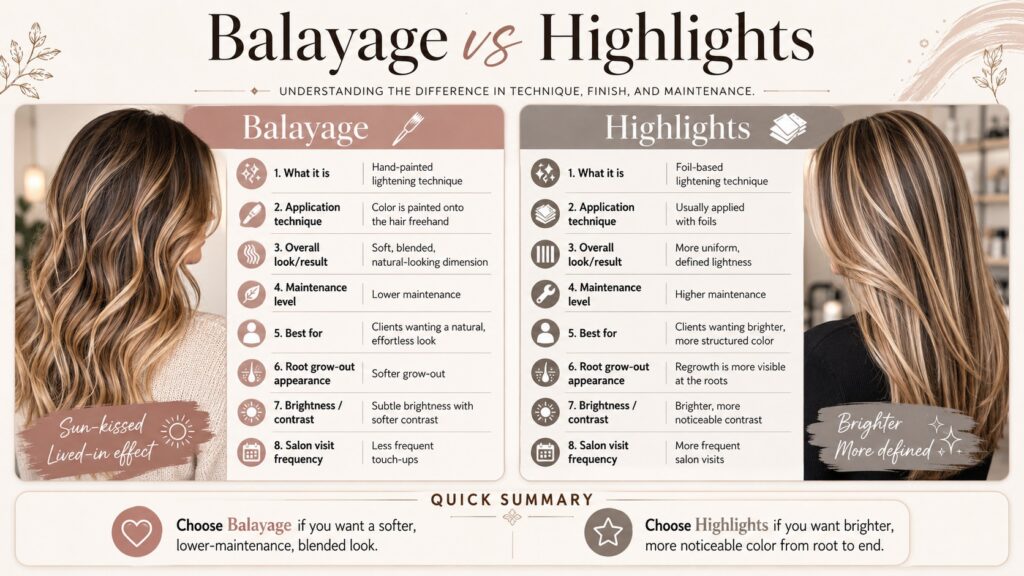
What Are Highlights?
Highlights use a different process. I section your hair and apply lightener, then wrap each section in foil to process.
This gives more consistent, all-over brightness than balayage. It also creates a more visible line where your natural color starts to grow back in.
Highlights can be partial and focused around the face, or full head for maximum brightness. Either way, they suit anyone who wants a dramatic change in one visit.
Is Balayage Better for Low-Maintenance Hair Color?
For most people, yes. I paint balayage to blend into your natural color, so the grow-out looks intentional instead of obvious.
My balayage clients typically return every 3 to 6 months for a refresh. A gloss refresh every 6 to 8 weeks keeps the tone bright between full appointments.
Highlights are not high maintenance by definition. They simply show regrowth sooner, since foil color often starts closer to the root.
How Long Does a Balayage or Highlights Appointment Take?
Balayage appointments run 2.5 to 6 hours, depending on your hair and how much dimension you want. A full head of foil highlights often takes a similar range, while partial highlights can be quicker.
Balayage on Blonde Hair
Going blonde is one of the most common reasons clients choose between balayage and highlights. I lift hair in soft painted sections for balayage, so the blonde looks sun-warmed rather than solid.
Highlights and full foil work can take blonde hair lighter and brighter for an even, all-over result. Both routes need the right aftercare to stay bright and avoid brassiness.
My Blonde Specialist Calgary page covers full-head bleach, foils and blonde maintenance in more depth.
Balayage on Brown or Dark Hair
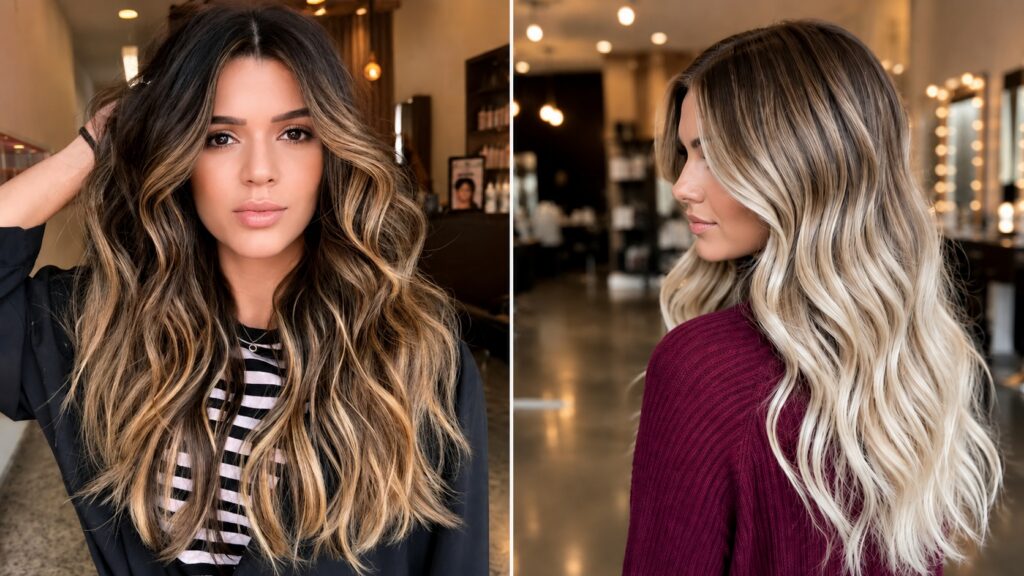
Balayage also works beautifully on brown and dark hair, often adding dimension without going lighter. Highlights on dark hair create more contrast, since the lightened sections stand out against a deeper base.
If you want to stay in the brown family, my Brown Hair Color Shades guide has you covered. It walks through every brown tone, from ash to chocolate to caramel.
When Do You Need Toner or Gloss After Balayage or Highlights?
Lightened hair often pulls warm right after balayage or highlights. Toner and gloss both correct that, neutralizing the yellow or orange tones the lightening process leaves behind.
I add a toner as a quick step at the end of your appointment. A gloss adds shine and tint, refreshed every 6 to 8 weeks to stay true.
My Hair Color Calgary service covers gloss and toner in more depth.
What If Your Highlights or Balayage Turned Orange, Brassy, or Patchy?
Warm brassy tones usually mean the lightener processed too far, or the toner faded faster than expected. Patchiness often points to uneven lightener application, or color applied over previous box dye.
Either problem is fixable, but it is not a DIY fix. I always assess what is actually in your hair before adding anything new.
My Color Correction Calgary service is built for exactly this kind of fix.
Can Balayage or Highlights Blend Grey Hair?
Both techniques can soften the look of grey to some degree. My Air-touch balayage technique is built specifically to blend grey into the surrounding color.
Full grey coverage is a different service, built around root regrowth rather than dimension.
My Root Touch-Up & Grey Coverage service covers full grey coverage in detail.
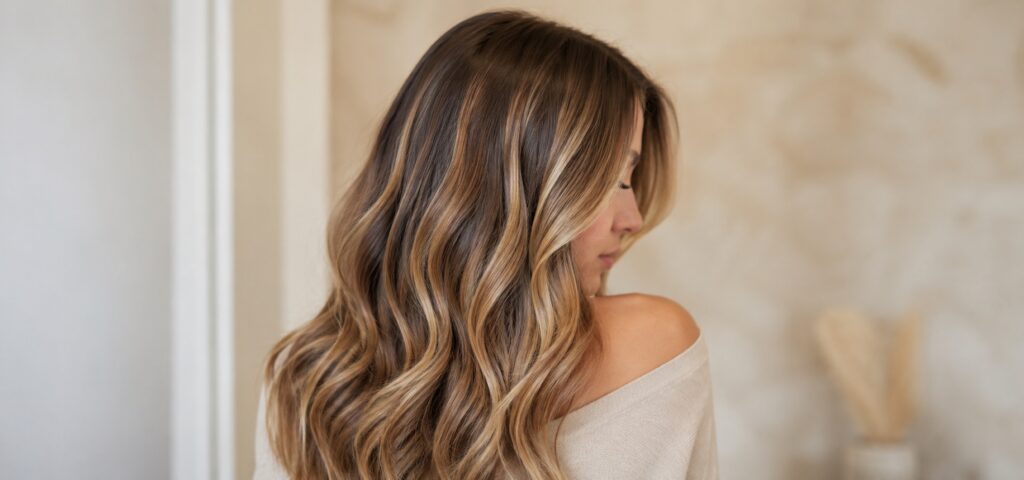
Final Answer: Should You Choose Balayage or Highlights?
Neither technique is objectively better. The right one depends on your hair, your goals and how much upkeep you want to commit to.
Choose balayage if:
- You want soft, low-maintenance color
- You want your regrowth to look intentional
- You want a natural, sun-kissed result
Choose highlights if:
- You want maximum, even brightness
- You are comfortable with more frequent touch-ups
- You want a dramatic change in one visit
How I Decide Between Balayage and Highlights
Neither choice is a compromise. Both are honest, well-tested techniques.
Before I recommend either technique, I check a few things:
- Your natural base color
- Your hair's current health
- How much contrast you actually want
- How much upkeep you want to commit to
Those details decide whether balayage or highlights is right for you, not a trend or a photo.
Balayage vs Highlights - Frequently Asked Questions
What is the best balayage color for brown hair?
There’s no single best balayage color for brown hair, it depends on your undertone and how much lift you want. I usually reach for caramel, chocolate, or golden brown to add warmth without over-lightening, then adjust in person once I see your natural base, skin tone, and hair health.
What looks better, highlights or balayage?
Neither is objectively better, they solve different problems. I use balayage for a soft, low-maintenance grow-out with a natural fade, and highlights when you want maximum, even brightness with a more defined line. Your hair goals and how much upkeep you want decide which one actually wins for you.
What color balayage is most popular?
In my chair, warm caramel and golden-brown balayage get requested most right now, especially for a soft, sun-kissed look that grows out gently. That reflects what I personally see walk through my door, not a confirmed industry-wide statistic, so treat it as one working colorist’s honest read.
What do face-framing highlights do?
Face-framing highlights place lighter pieces right around your hairline and cheekbones, the spots your eyes naturally go first. I use them to brighten your features and add contrast exactly where it matters most, without lightening your whole head or committing to a full highlight service.
Who does face-framing look good on?
Nearly anyone, since I place each piece based on your actual face shape and natural part, never a template. I lean warmer for medium to deep skin tones and cooler for fair skin, and I always test the placement against your natural growth pattern before I touch a single section of your hair.
Are face-framing highlights worth it?
Yes, if you want brightness without a full head of color. I find them worth it for the lower cost and lower maintenance compared to an all-over service, though they will not give you the same overall lift or brightness as complete highlights throughout your hair, so it depends on your goal.